Procurement documents 100 pages long? A summary in minutes
A hundred pages of procurement documents can be reviewed in minutes: AI prepares the key conditions, while the decision is always made by a person.
The problem: too many documents, too little time
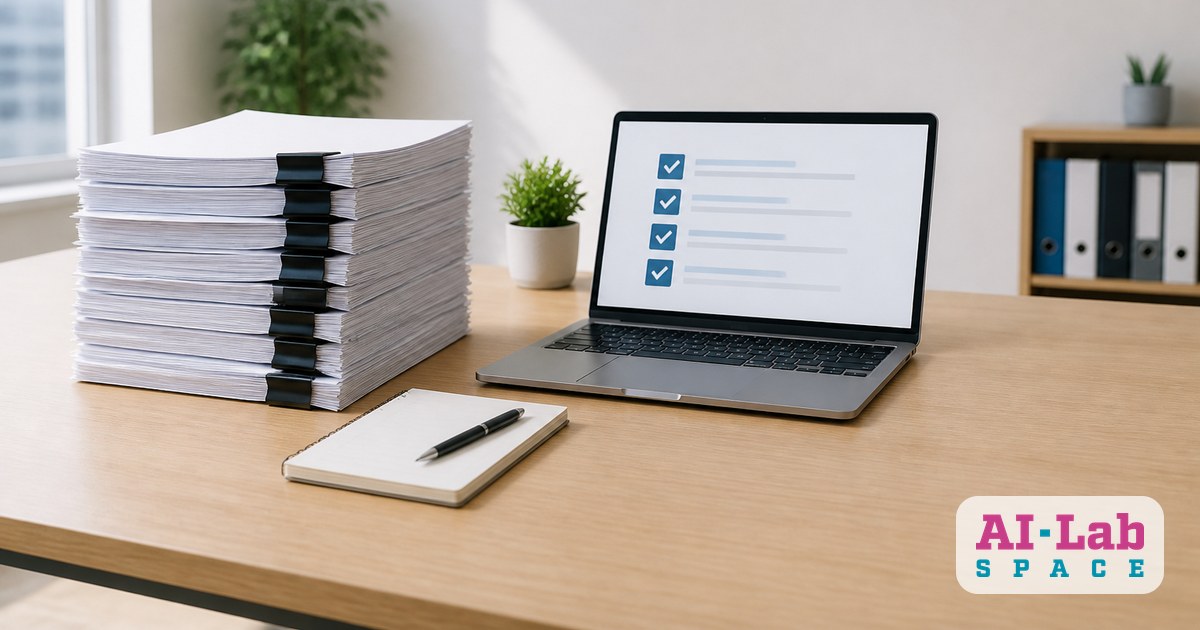
Procurement documentation is rarely short. The regulations, technical specification, draft contract, annexes, clarifications and amendments easily add up to a hundred pages or more. And the decision on whether it is worth taking part in a procurement at all has to be made quickly, because the deadline is running.
A typical situation: the documents are opened by someone who already has other work to do. The first pages are read carefully, then the reading becomes superficial. An important condition, such as a requirement for specific experience or a short delivery deadline, can end up in the middle of an annex and be noticed too late.
What it looks like in a company
Think of a company where several people prepare procurement bids. The process often looks like this:
- the documents are downloaded and emailed to several colleagues;
- each person reads their own part, but there is no overall view;
- the requirements are written out on paper or in a separate table that differs between versions;
- the manager makes the decision after a short verbal briefing;
- after amendments or clarifications, nobody knows for sure what has changed.
This is not a problem of incompetence. It is a problem of work organisation: a person's time is spent on re-reading instead of evaluating. Evaluation is exactly what cannot be handed over to someone else.
The solution: AI prepares the overview, a person decides
A practical solution is to use AI as a document reader that prepares a structured summary. My AI agent Jarvis receives the procurement documents for this task and prepares a short overview following a pre-agreed template. Jarvis does not make decisions, it only finds and organises information.
A good summary usually contains:
- the subject and scope of the procurement in one or two sentences;
- important deadlines: bid submission, questions, contract performance;
- qualification requirements for the company and for specialists;
- required documents and confirmations;
- evaluation criteria and their weighting;
- contract terms that create risk: penalties, payment terms, warranties;
- questions that are unclear in the documents and worth clarifying.
It is important that every point includes a reference to the place in the document where the condition can be found. That way a person can check the source in a few seconds instead of taking what the AI says on trust.
How it works step by step
- The documents are placed in one folder or sent to the agent.
- The agent reads them and prepares a summary following your template.
- The summary goes to the responsible person, who checks the key points.
- If amendments appear in the procurement, the agent compares the new version with the previous one and indicates what has changed.
- The person decides: take part, clarify questions or decline.
The decision stays with the person
This is a principle that should not be bypassed. AI can make mistakes: misunderstand a wording, skip an annex or misread a table. That is why the summary is the start of the work, not the final opinion. Before a bid is submitted, a person always checks the requirements and deadlines against the original document.
Another issue is confidentiality. Before passing any documents to an AI tool, consider what data they contain, where it is processed and whether this complies with your internal rules and contractual requirements. Publicly available procurement documents usually carry fewer risks, but your own price calculations and internal information need particular attention.
What it gives you
The main benefit is time for the first decision. Instead of several people reading hundreds of pages, one person receives an overview within a couple of minutes and can decide whether the procurement suits your company.
In practice this means:
- faster selection of which procurements to take part in;
- a lower risk of missing a deadline or a requirement;
- a uniform summary format that everyone on the team understands;
- a clearer overview of amendments;
- more time for the bid itself, the price calculation and negotiations.
Over time, the summaries also build up a company knowledge base. By seeing which requirements keep recurring, you can plan which documents and certificates to keep ready.
Where to start
There is no need to automate the whole procurement process at once. Start with one step:
- Choose two or three past procurements that you already know, and check whether the AI summary matches what you found in the documents yourself.
- Define the summary template. Discuss with your team which points matter to you: deadlines, qualifications, risk conditions.
- Agree on the checking procedure. Who approves the summary, and which items must always be checked against the original.
- Set data rules. Which documents may be passed for processing and which may not.
- Then expand: add amendment comparison, deadline reminders and a link to your CRM or task system.
If you would like to understand how this could look in your own company, which documents to start with and in what order, get in touch. Ask privately.